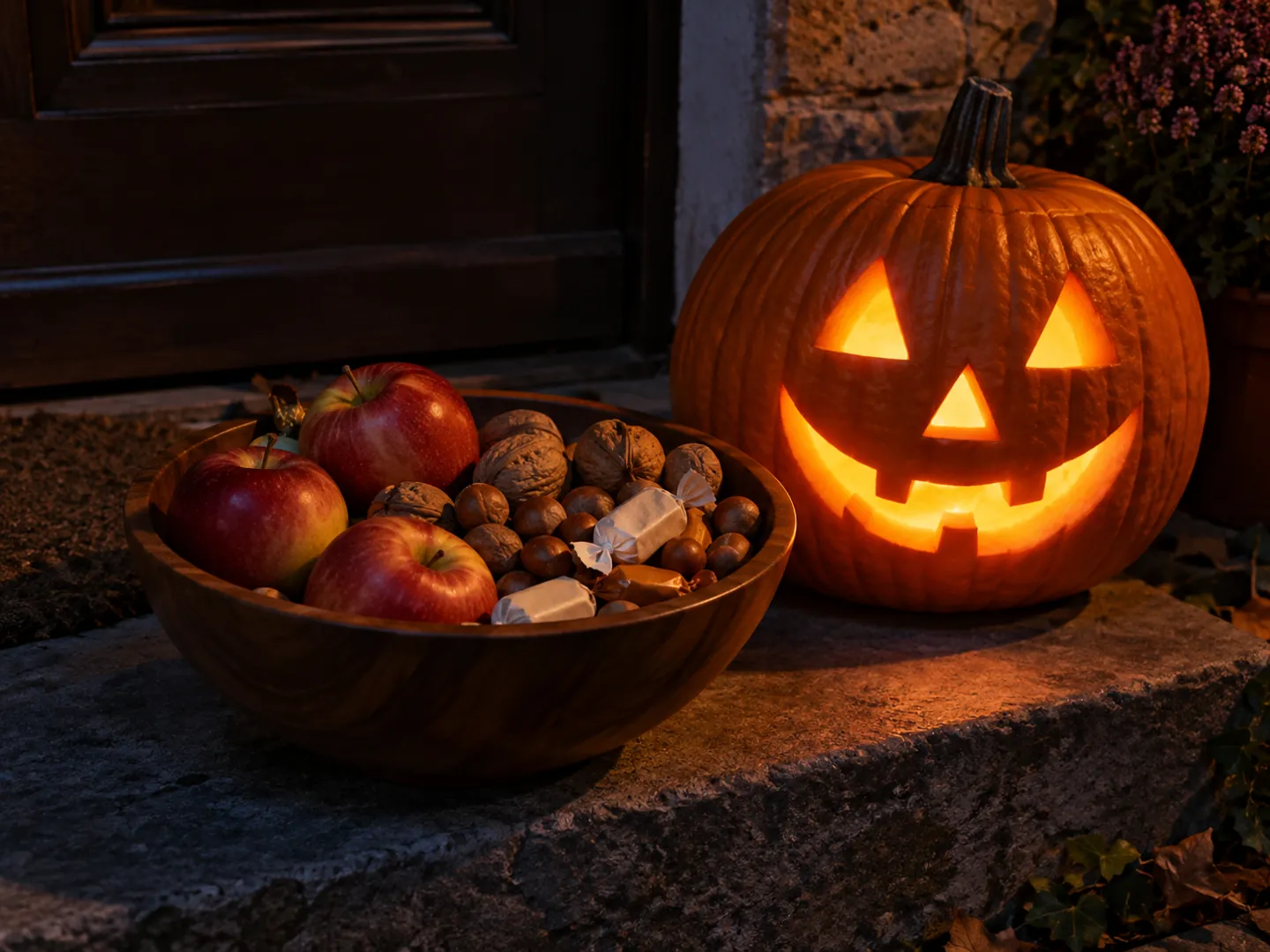
Halloween looks American, but much of it began in Ireland and Scotland.
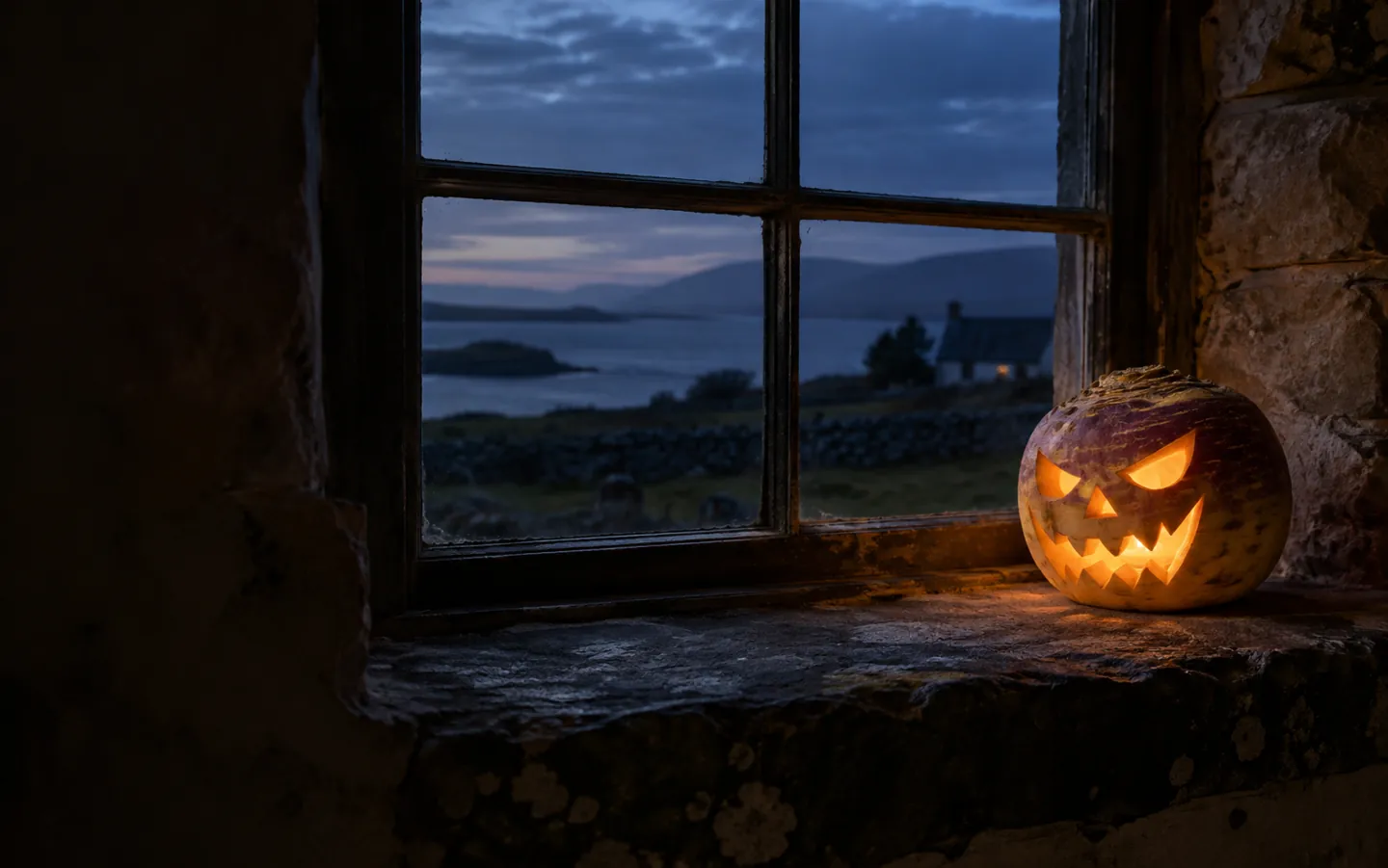
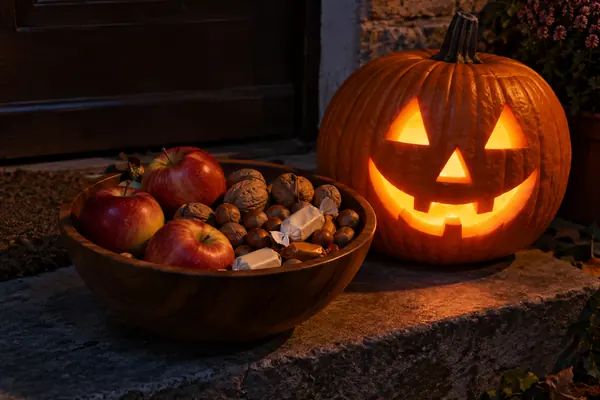
The night takes its name from All Hallows' Eve, the evening before 1 November, and many of its customs are traced to the Celtic festival of Samhain. Carved lanterns were turnips, door-to-door visitors were guisers, and the treats were often fruit and nuts.
AI-generated image, not a photograph of a real person or place.
Lanterns were turnips
Guisers earned treats
Sweets came last
Old night, new habits
THE SHORT ANSWER
Old customs, new treats.
Most Halloween habits are older than the pumpkin. Some origins are well recorded; others are good stories.
LANTERNS
Jack's turnip
In Ireland, people carved turnips into scary-faced lanterns. The National Museum of Ireland says the pumpkin is an American development of that tradition.
Guisers in masks went door to door and entertained for a treat. Until the mid-20th century that treat was as likely to be fruit, nuts, coins or toys as sweets.
Pick a custom. The bar shows how firmly the sources tie it to its origin.
Based on the National Museum of Ireland, the Library of Congress and Historic UK.
TWO DATES WORTH KNOWING
Turnips by 1900, sweets by the 1950s.
One date from a museum's turnip, one from American newspapers.
c. 1900
Donegal turnip lanterns of this type, made around
In 1943 a teacher near Fintown, Co. Donegal, sent the museum a turnip lantern of the kind always made in her area around 1900. Candles inside were used to frighten people on 31 October.
LANTERNS · NATIONAL MUSEUM OF IRELAND
1950s
When trick-or-treating rose in popularity in the US
This inspired small, individually wrapped sweets. Sweets did not crowd out other treats until the 1970s, when parents began to fear anything unwrapped.
SWEETS · LIBRARY OF CONGRESS
Historic UK notes that Britain traditionally carved swedes and turnips, and that the pumpkin and the 'trick-or-treat' tradition as we know it came from the United States.
FOUR OLD CUSTOMS TO TRY
Try a Halloween from before the pumpkin.
Many older customs are easy to revive, and the museum says the festival is still practised much as it was for generations.
Carve a turnip
Hollow out a turnip or swede, carve a face and light it from inside, as Irish and British households did before pumpkins.
Earn your treat
Guisers gave entertainment in return for a treat. A song, joke or trick at the door keeps the old exchange alive.
Bob for apples
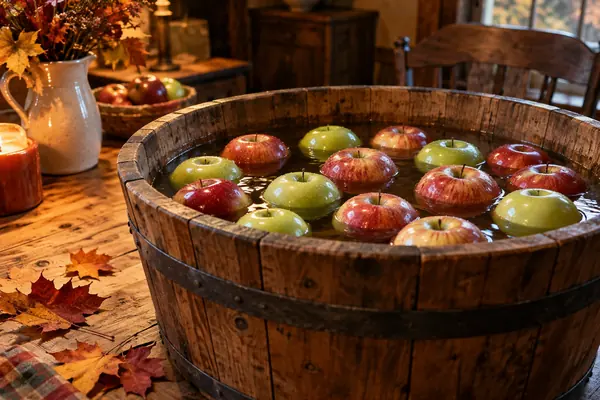
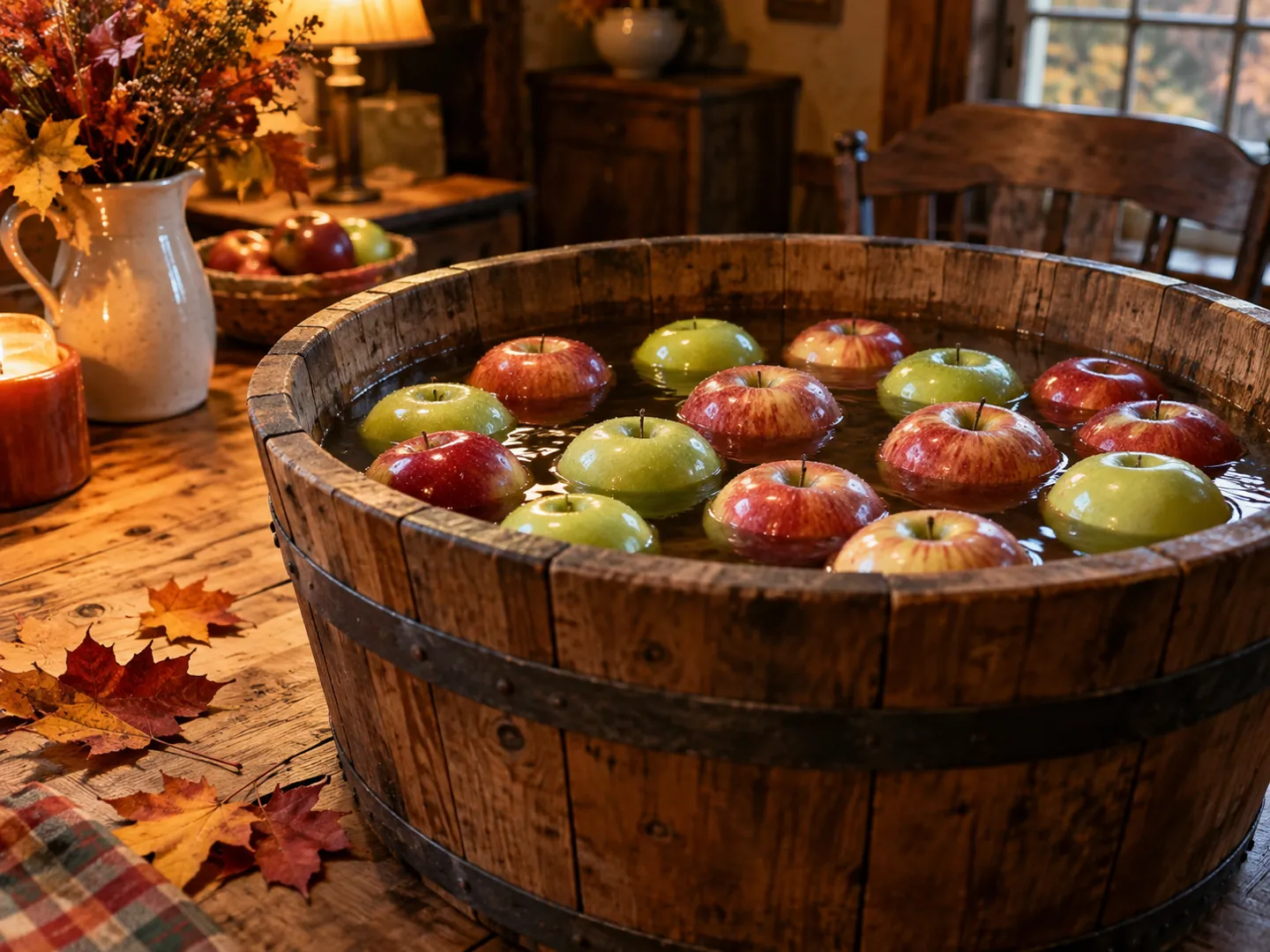
Apples floating in water, or 'apples on a string', were common games on the night.
Bake a barmbrack
The báirín breac was the traditional Halloween cake in Ireland, often with a ring baked inside for the lucky slice.
AI-generated image, not a photograph of a real person or place.AI-generated image, not a photograph of a real person or place.
GAMES AND FORTUNES
A night for guessing the future.
In Ireland, objects baked into the báirín breac told fortunes: a ring for marriage, a coin for wealth, a rag for poverty. Blindfolded games with bowls or cabbages were also used to predict a future spouse.
It was a night for pranks too. The National Museum of Ireland records 'Knick Knock' jokes, throwing cabbage heads at doors and even rebuilding carts inside houses. Irish and Scottish emigrants took mischief night to America.
Questions
Questions people ask
Why is it called Halloween?
It is the evening before All Hallows' (All Saints') Day on 1 November: All Hallows Eve became Hallowe'en and then Halloween.
Where did trick-or-treating come from?
Origins are debated. The Library of Congress gives three theories, including Scottish and Irish guising, where disguised visitors entertained for a treat. The National Museum of Ireland traces it to guising.
Why do we carve pumpkins?
In Ireland and Britain people carved turnips and swedes. The pumpkin is an American development of that tradition.
Who was Jack of the lantern?
In the folktale, Jack was welcome in neither Heaven nor Hell and was doomed to wander with only a lantern to light his way.
When did sweets become the usual treat?
Trick-or-treating rose in popularity in the 1950s, and wrapped sweets came to dominate in the 1970s. Before that, fruit, nuts, coins and toys were common.